
On 22 June 2026, the Symposium themed “Trademark Prosecution Quandary of Internet Companies and the Solutions”, which is organized by the Internet Trademark & Brand Committee, China Trademark Association (CTA), is held in Beijing.

Group photo of the attendees
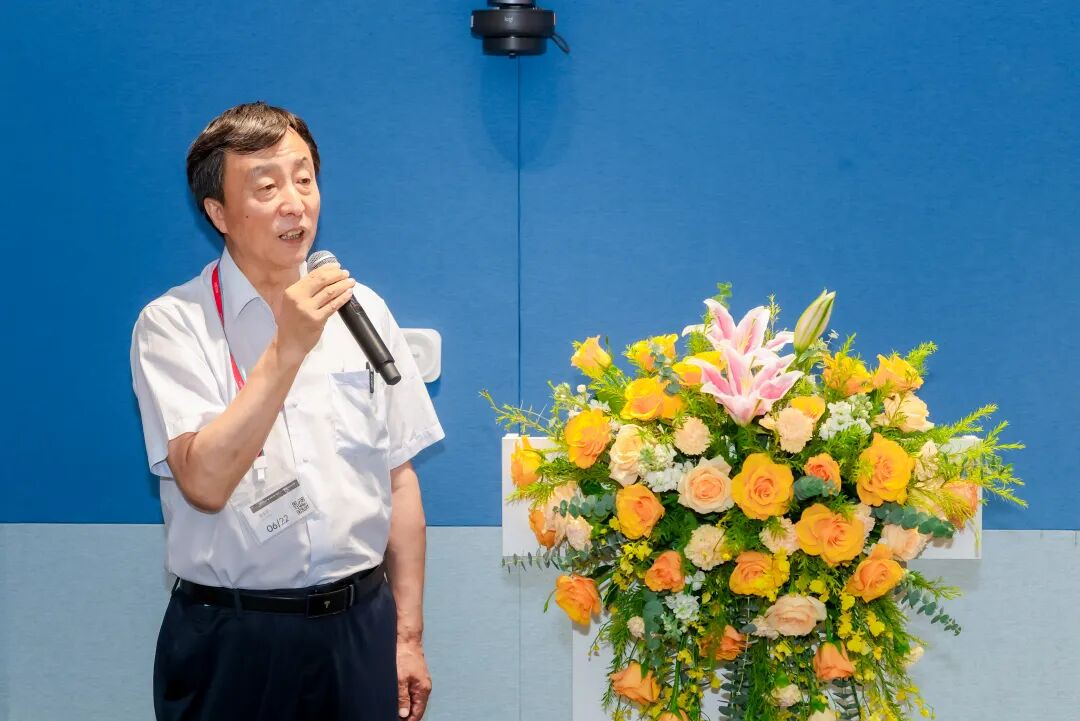
Wu Dongping, CTA Vice President and Secretary General, highlights the committee’s pivotal role in providing a vital platform for various stakeholders to engage in discussion and forge consensus.
Qi Juan, Chief Intellectual Property Counsel, Douyin, reiterates Douyin’s commitment to enhancing the management efficiency of trademark and patent assets via digitalised approach and to reinforcing platform governance and brand protection amid the accelerating Internet industrial transformation. With Douyin being the rotating joint executive director of the committee, she vows to share best practice and explore solutions to address the increasingly complex trademark prosecution landscape, which remain challenging due to legal vacuum and enforcement budget control pressure.

Zhao Yijing, Deputy Section Chief, Filing Administration Section, Trademark Office, China National Intellectual Property Administration (CNIPA) delves into how the rapidly evolving Internet technology is reshaping the classification rules and similarity assessment of goods and services. She underscores that the classification of smart goods shall be based on its function or usage, while in principle, the classification of smart services shall be immune to how such services are provided, unless its purpose or result changes as a result. As to virtual goods, SaaS (Software as a Service), and other nascent industries, Ms. Zhao proposes that the characteristics of goods and services in the Internet era and the technical utilization reality shall be taken into account in the examination practice.

Jiang Jinghui, Section Chief, Opposition Examination Section II, Trademark Office, CNIPA, parses the “Application of Article 13 of the Trademark Law in the Opposition Procedure”. Ms. Jiang reiterates that the recognition of well-known trademark (WKTM) must follow the “case-by-case” principle, to ensure that the recognition is necessitated by the circumstances. She then analyses the parameters surrounding the “confusion” and “misleading”, “dilution” and “derogatory” scenarios justifying the application of Article 13, with particular focus on “awareness of the relevant public”, “duration of trademark use”, “trademark promotion duration and geographical coverage”, “protection records”, among others.

Fan Xue, Senior Prosecutor Assistant, Intellectual Property Division, Supreme People’s Procuratorate, speaks on the “Application of Fraudulent Clauses in the Trademark Law”. Ms. Fan systematically analyses the judicial considerations concerning the “fraudulent” and “likely to mislead the public” clause and the legal ramifications of breaching such clauses. She later delineates, from a case law perspective, the differing criteria in finding confusion during trademark examination and the judicial adjudication process. She underlines the significance of market stability, where the accused trademark has been extensively used insofar as that stable market order has been formed and the evidence fails to prove actual confusion.

Professor Du Ying, Doctoral Supervisor, Director of IP Centre of Central University of Finance and Economics, differentiates the application parameters surrounding the descriptive clause and the fraudulent and misleading clause in the Trademark Law. Professor Du warns that the application of descriptive clause shall not be premised on the truthfulness of the description, and false description shall not be equated with the fraudulent and misleading scenario prescribed by the law, as the latter has to cause misidentification among the public and thus influence the purchasing decision.

Yang Mingming, Partner, Wanhuida Intellectual Property speaks on the “International Observation of Internet Businesses’ Trademark Prosecution Problems against the Backdrop of the Fifth Amendment to the Trademark Law”. His presentation focuses on topics of co-existence agreement, non-use revocation, motion trademarks, among others. Mr. Yang identifies the divergence between the practice in international mainstream jurisdictions and the Chinese regime, advocates for the creation of “conditional approval” of co-existence agreement in China, barring actual confusion. He also calls for the implementation of precise “partial non-use revocation” and the creation of supporting regimes. He lays out the registration risks associated with motion marks, and cautions the functionality pitfall, distinctiveness threshold and international filing requirements thereof.
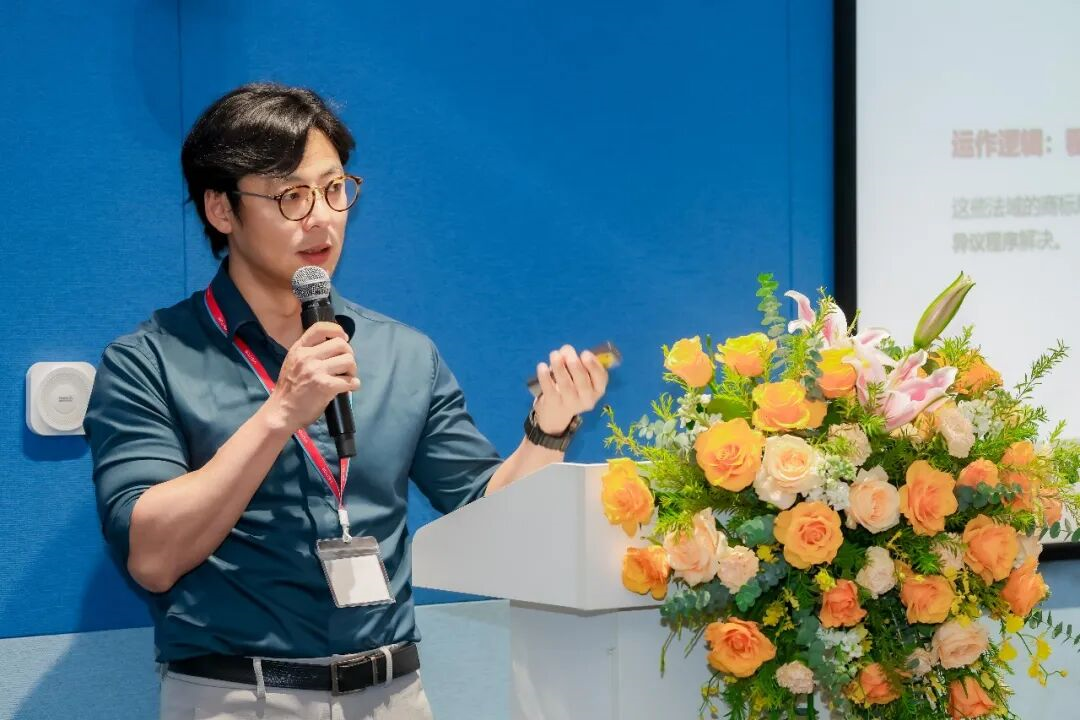
The symposium is moderated by Sally Zhu, Trademark and Brand Legal Director, Douyin and Joint Executive Director of the committee.
