
On July 31, 2026, the inaugural session of the “Seminar Deciphering the New Chinese Trademark Law”, which was hosted by Beijing JUSTRA Intellectual Property Center (JUSTRA), organised by Wanhuida Intellectual Property, was held in Beijing.

The Seminar featured three keynote speech, deciphering the fifth amendment to China’s Trademark Law from legislative, prosecution & portfolio management, as well as enforcement perspective. The Seminar was moderated by Dr. Wang Ze, JUSTRA Vice President.
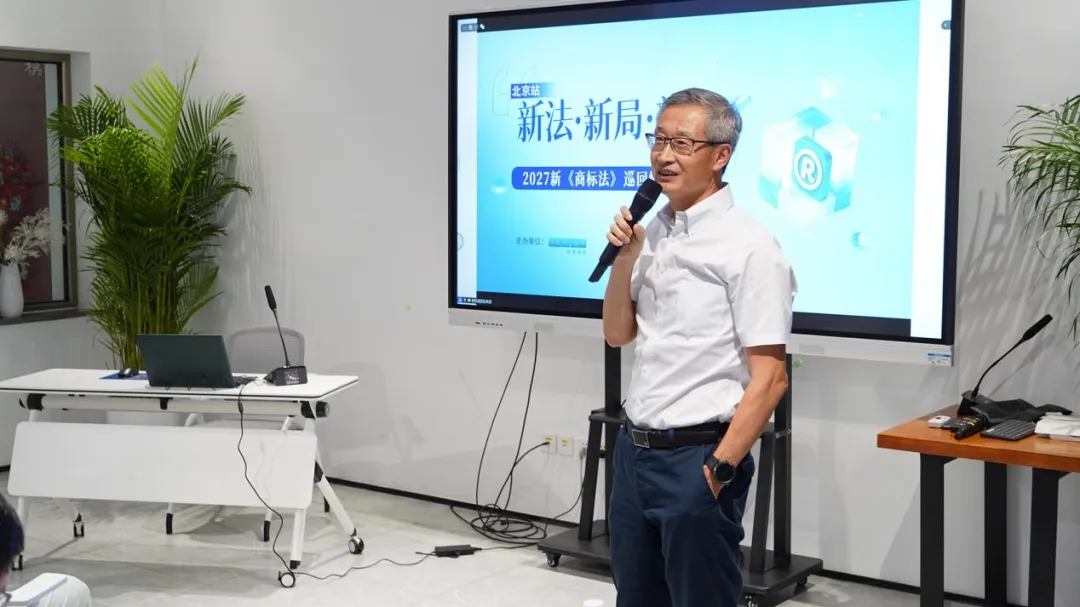
Dr. Huang Hui, the firm’s Partner and Management Committee member, spoke on the “Significance of the Fifth Amendment to the Trademark Law”. Dr. Huang prepared the floor on the key legislative revisions, covering aspects including: “Strengthening the obligation to use registered trademarks”, “Stepping up efforts to combat malicious registrations”, “Regulating the use of registered trademarks”, “Stronger protection of well-known trademarks”, “Adjustment of procedural provisions”, as well as “Stronger supervision of trademark agencies and trademark practitioners”. He underlined that the new amendment pivoted trademark governance from trademark registration to genuine use and fair assertion of trademark rights. Dr. Huang cautioned that the new law explicitly indicates securing a trademark registration is the beginning of trademark management, and whether a trademark could fulfill its source identifier function hinges on the genuine use, proper management and fair assertion of the brand owner. As the Implementing Regulations of the Trademark Law and the Trademark Examination Guidelines are currently under review, the law application during the transition period needs clarification.

The firm’s Partner Yang Mingming spoke on “New Challenges of Building and Managing Corporate Trademark Portfolio: From Application to Use”. Mingming dissected the regulatory change on trademark registration, malicious application and supervision of trademark use. He highlighted the measure where the new law clamps down trademark hoarding by banning trademark registrations “manifestly beyond the need for normal production and business operation". He also pointed that the mechanism introduced in the application process to curb malicious application reinforces the governance of the whole trademark lifecycle. Mingming welcomes the punishment regime installed against misleading trademark use and unilateral alteration of registered trademarks, as well as the campaign against "smart trademark" - a registered trademark, which might be later deemed as "deceptive", or, depending how it is used, in what context, in tandem with what additional sign, might be perceived as “deceptive”. He advised brand owners to differentiate current business needs, the need to create future trademark reserve and to secure defensive registrations, and build a well-rounded compliance management system, in order to adapt to the structural challenges brought by the institutional change.

The firm’s Partner Fan Yongming spoke on “Observation of the Nascent Trademark Enforcement Rules under the New Trademark Law”. Yongming analysed the substantive changes brought to the enforcement regime by the fifth amendment. He underscored a few inspiring changes, including a long-awaited improvement to the protection of unregistered well-known trademarks on dissimilar goods, the official confirmation of well-known trademark status in the trademark case handled outside of China, and the legislator’s legalizing for the first time the indicative trademark use as fair use as long as such use does not cause confusion. It is also welcome that the new law adjusts the provisions concerning the sequence and wording for calculating damages, allowing free choice of the calculation method, and lists reasonable expenses as a standalone entry after enumerating all forms of damages. In calculating punitive damages associated with trademark infringement, the new law lowers the threshold from “malicious infringement” to “intentional infringement”. It also adds a new article to impose penalties against trademark lawsuits filed by malicious collusion and orders to strengthen coordination between administrative enforcement and criminal prosecution, and adds rules for public security organs, procuratorates, and courts to transfer cases to or request assistance from trademark enforcement departments. Brand owners are therefore advised to review and upgrade their enforcement strategy accordingly.

The Seminar was well attended.
